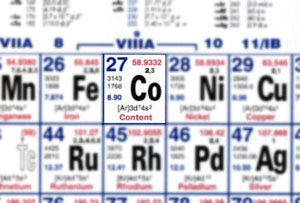
According to Wikipedia, the concept of physical things being constructed out of smaller, indivisible units, or elements, has been around for about 2,600 years. Science confirmed this about 200 years ago. Atoms can be broken down further, but any division past that atomic level and the element ceases to be an element.
Why the science lesson? What does this have to do with content? I have taken us all back to the science classroom because elements and atoms are a rather fitting analogy. This element is not on the periodic table: it is known as…Content.
From a production point of view, content has almost always started from the single, discrete piece. From there, each piece has been combined to make a larger component. For example, think of a newspaper article: an election story might appear in the politics section of the Monday edition of the local paper.

For newspapers, selling single stories at the newsstand was a tough proposition. Selling the politics section was too narrow of an appeal. But, if you put that into a larger framework, a whole newspaper with sports scores and weather and classifieds and advertisements, it starts to make more sense.
The same hierarchy existed for many years on public radio. A six minute feature was produced, then included in the larger framework of an hour-long show, and on a select day, broadcast on a radio station. The production direction from small piece to large framework was it. That was before the advent of on-demand listening and podcasts.

For some, peeling off one layer of that hierarchy to adapt to online consumption habits was seen as enough. If producers took an hour-long show and placed it online, the work was done. No additional production required. Easy. Take the same hour-long chunk that airs on radio stations and make it available online via on-demand and podcasting. But that is not serving the needs of the people that actually consume the content.
Using the newspaper example again, imagine that you want to share an article with a friend. Do you point them to the stack of old newspapers in the garage from the last month? Or the whole newspaper from Monday? Or the Politics section from Monday? The easier way would be to clip the article out, and give them that specific thing you wish to share. Your friend will know exactly what you want them to see.
The same thing happens in public radio. Some programs are two or more hours long, built out of smaller segments. Wouldn’t it be ideal to have those segments in an easy-to-share format online? And wouldn’t it be great if you could comment on those individual segments? Of course. There are plenty of reasons to publish content at the segment level for consumption online:
- Accurate, focused metadata can be attached
- Proper taxonomy can be applied in the CMS
- It is SEO-friendly, increasing discover-ability
- It becomes much more easily shared via social media
- Easier to output via API, RSS, podcast, widgets, etc.
- Quickly becoming industry standard and convention
- People are beginning to demand it of content producers
- It just makes sense
There are reasons NOT to do it, too. Some obstacles you may encounter:
- Not in current workflows
- More attention is required
- More steps in publishing process
- Current CMS not equipped to handle it
- Current outputs not configured to handle it [website, feeds, etc.]
- Greater opportunity for user-input error
The benefits are far too great not to put forth the effort to overcome the obstacles in the way of segment-level nirvana.
Author and blogger Seth Godin has made a mantra out of the phrase “Ideas that spread, win.” If your idea, in the shape of content, can spread, it can win! Not a jackpot lottery win, but the kind of win that content wants: to be consumed and shared easily.
Atomic segment-level publishing, FTW!